AI Agents
216 specialists across 14 departments — 158 with a working automation behind them. They're the same agents you see working on the Live Maps.
Sales
15 agentsFill the pipeline, keep the CRM honest, never drop a follow-up.
Builds prospect lists, researches each one, and drafts personalized cold outreach for your approval every morning. Cold outbound dies when reps spend the day researching instead of selling. Dex does the list-building and the research at night, so every morning starts with outreach ready to send.
Before every sales call, compiles who they are, what they need, and what to say. Walking into a call cold loses deals. Ivy makes sure no one on your team ever asks a question the CRM already knows the answer to.

Listens to every sales call, logs notes, updates fields and next steps automatically. Reps hate typing into the CRM, so the CRM lies. Cleo listens to the calls and keeps the record straight without anyone typing a word.

Drafts the recap email with agreed next steps minutes after each call. The deal cools every hour the recap doesn't go out. Theo has the follow-up drafted before the rep is back from getting coffee.
Turns call notes and pricing rules into a branded quote ready for review. Proposals take reps hours they should spend selling. Sage assembles the quote from what was actually discussed, priced by your rules, in minutes.

Re-engages prospects who went quiet or said 'not now' with perfectly timed nudges. Most 'no's are 'not yet's that nobody ever followed up on. Flint keeps a diary of every stalled deal and knocks again at exactly the right moment.

Rolls the pipeline into a weekly forecast with deal-by-deal confidence. Forecasts built on rep optimism miss. Gia reads the actual signals — activity, stage age, engagement — and calls the number the pipeline supports.
Reminds booked prospects before every call so they actually show up. A no-show is a deal you already won and then lost. Nia makes sure booked prospects remember, reschedule, or confirm — so the calendar converts.

Handles the whole scheduling back-and-forth with prospects across time zones — you just show up. Every 'does Tuesday work?' email is a chance for the prospect to go cold. Beau closes the loop in one exchange and puts the meeting on the calendar.

Role-plays objections tailored to each rep's live deals and scores their practice calls. Reps practice on real prospects — the most expensive training ground there is. Koa lets them rehearse the hard conversation before it counts.
Drafts answers to sales RFPs and tenders from your answer library — a first-pass response in hours, not weeks. RFPs are won by whoever answers thoroughly and fast — and they eat a rep's whole week. Zeke drafts the first pass from every answer you've ever given.
Drafts connection requests, comments and warm touches for your target accounts every day. Deals warm up in the feed long before the first call. Lou keeps you present on every target account without you living on LinkedIn.

Assigns every new lead to the right owner by territory, size and round-robin rules — instantly. A lead that waits an hour is half as likely to answer. Sid routes every one to the right rep in seconds, with the rules applied consistently.
Watches customer contract end dates and drafts the renewal outreach 60 days out. Renewals lost to silence are the most preventable churn there is. Romy starts the conversation two months early, every time, with the account's story in hand.

Turns an account's usage and renewal date into a renewal + upsell play, ready to send. Renewals are won weeks early, using the account's own momentum as the argument. Roan reads the usage signal and writes the play that renews and expands in one motion.
Marketing
15 agentsContent, campaigns and ads — drafted, scheduled, watched.
Drafts your LinkedIn posts in your voice from one rough idea. Everyone knows they should post; nobody has the hour it takes. Wren turns one rough idea into a post that sounds like you wrote it on a good day.

Turns a topic into a ready-to-post Instagram carousel, slide by slide. Carousels perform, but writing ten slides that hold attention is a craft. Kai structures the story arc so slide one hooks and slide ten converts.

Turns one blog post or webinar into social posts, clips and an email. You already made the content — most of its value is wasted if it lives in one place. Zara squeezes every format out of every piece.

Finds and qualifies fresh leads that match your ideal customer, into a list. The top of the funnel starves quietly. Otis keeps it fed with leads that actually fit — scored, deduped and ready for Sales to work.

Drafts Meta ad angles, hooks and copy variants for approval. Winning ads die and need replacing weekly. Mira keeps a bench of fresh angles and variants warmed up so campaigns never run stale.

Builds Google search campaigns: keywords, ads, extensions. Search campaigns are won in the structure. Levi builds tight ad groups, honest match types and copy that mirrors what people actually typed.

Plans a full campaign across channels and tracks every moving piece. Campaigns fail in the coordination, not the creative. Isla holds the whole map — every asset, channel and deadline — so nothing launches half-ready.

Drafts the landing page to match an offer: copy, layout, call-to-action. Traffic is expensive; a mismatched landing page burns it. Enzo drafts pages where the headline finishes the ad's sentence.

Researches keywords and the top-ranking pages for a topic, then writes the content brief a writer can execute. Content written without a brief ranks by accident. Nyla studies what already wins the search result and hands the writer a map to beat it.

Assembles the weekly newsletter from your recent content, product news and curated links — formatted and ready. The newsletter is everyone's job and therefore no one's. Elle assembles it every week from what the company already produced, so it actually ships.

Checks every paid campaign daily for overspend, creative fatigue and cost drift — and says what to do about it. Ad accounts leak money quietly: a fatigued creative here, a runaway ad set there. Brock checks every campaign every morning and names the leak.

Monitors mentions and reviews of your brand across the web and social — with suggested responses. People talk about you in places you'll never scroll past. Mona hears all of it and tells you what needs a reply today.
Spots your happiest customers at the right moment and drafts the personalized review request. Happy customers rarely leave reviews unprompted — and asking at the wrong moment burns goodwill. Gale asks the right person at exactly the right time.

Renames, tags and files every new creative asset by convention — a library you can actually search. The third time someone rebuilds an asset that already exists, the library has failed. Paz keeps every file named, tagged and findable.

Turns your offer into a complete long-form sales page — headline to guarantee to close — built on real conversion craft. A sales page is a sequence where every section earns the next, and most pages skip the thinking. Eugene does the offer strategy first, writes the whole page, then reviews it like a skeptical buyer before you ever see it.
Customer Service
12 agentsEvery ticket answered fast — humans only see the hard ones.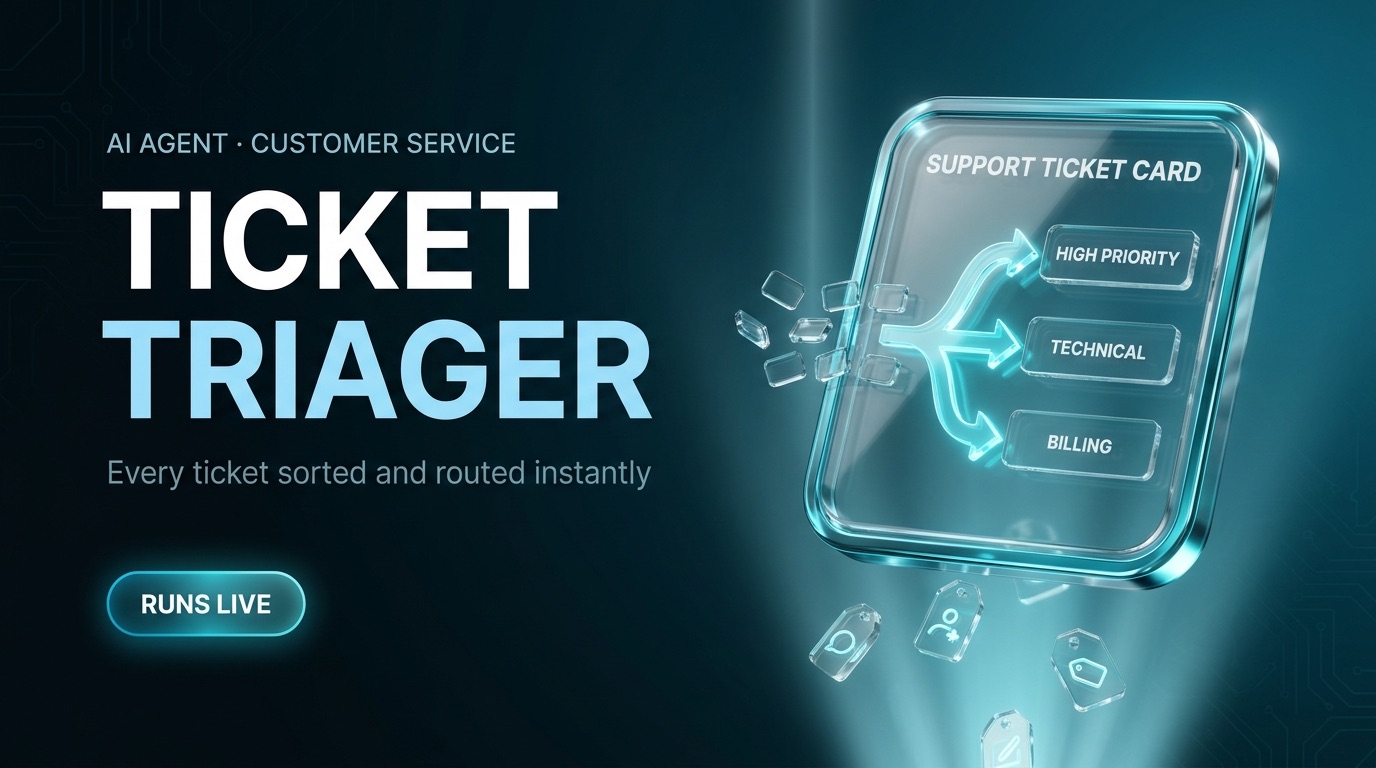
Reads every incoming ticket, tags topic and urgency, and routes it to the right queue. A messy inbox means angry customers wait behind easy ones. Finn reads everything the second it arrives so the queue is always in the right order.

Drafts a suggested response inside every open ticket for one-click approval. Agents type the same answers all day. Ruby writes the first draft in every ticket so humans spend their time on judgment, not typing.

Turns solved tickets into help-center articles so the same question stops coming back. Every repeated ticket is a missing article. Omar mines what support just solved and writes it up so the next customer self-serves.

When a ticket needs a human, hands over a 30-second brief: summary, history, mood. Nothing enrages a customer like repeating their story. Lena makes sure the human picking up already knows everything.

Watches every account for churn warning signs — a weekly at-risk list with reasons. Churn announces itself quietly: slower replies, fewer logins, a colder tone. Ezra hears it early enough to do something about it.

Reads every survey comment and groups them — weekly top complaints and praises. Scores tell you the what; comments tell you the why. Tessa reads every single one so the pattern is impossible to miss.
Watches response deadlines and warns before any ticket breaches its promise. An SLA breach is a promise broken on a schedule you could see coming. Hugo watches every clock so no deadline ever surprises the team.

Compiles what customers are actually saying across channels into one digest. Support hears things Sales never does; reviews say what tickets don't. Yara stitches every channel into one honest picture of what customers think.

Answers every inbound call, handles the common questions, takes messages and books callbacks — around the clock. A missed call is a customer who tried you once. Sonny picks up on the first ring, day or night, and either solves it or books the human who can.
Turns support threads describing bugs into structured engineering tickets with reproduction steps. Engineers can't fix 'customer says it's broken.' Dov reads the whole thread and writes the ticket an engineer can actually act on.
Samples closed conversations and scores them against the quality rubric — a coaching sheet per agent. Support quality drifts invisibly until customers complain. Fern reads a sample of every agent's conversations weekly and turns them into coaching, not blame.

Turns an at-risk account's warning signs into a targeted retention save play. A churn risk spotted is only half the job — someone has to write the save. Wynn takes the red flags and drafts the play that re-earns the account before it walks.
Client Fulfillment
10 agentsDeliver what was sold — onboarded, tracked, reported.
The moment a deal closes: project space, kickoff checklist, welcome email — Day 1 ready. The client's excitement peaks the day they sign — and dies in the silence that follows. Nico makes sure Day 1 starts the same hour the deal closes.

Reads the project tool every Friday and drafts each client's progress email. Clients don't churn over bad results; they churn over silence. Aria turns the project board into a plain-English update every single week.

Turns sales calls and notes into a 'what we sold and promised' brief for delivery. The gap between what Sales promised and what Delivery heard is where projects go wrong. Silas writes down the promise before it evaporates.
Checks every deliverable against the brief and checklist before it goes to the client. Small misses — a wrong logo, a missed requirement — cost trust out of all proportion. Freya checks everything against the brief before the client ever sees it.

Schedules the regular client check-ins and preps the talking points. Relationships decay by default. Jude keeps the cadence — and walks you in with something worth saying every time.

Tracks every deadline, recalculates when something slips, drafts the explanation. One slipped task quietly moves five downstream dates. Opal recalculates the ripple immediately and drafts the honest client message before the surprise.

Gathers client feedback after each milestone — themes plus testimonial-worthy quotes. You only find out clients were unhappy when they leave — and only find out they were thrilled never. Ravi asks, listens and keeps the receipts.

Reads client requests against the contract, flags out-of-scope asks, drafts the change-order email. Scope creep never announces itself — it arrives as 'one quick thing.' Bea reads every ask against the contract so free work stops being the default.

Pulls each client's results monthly and writes the plain-English summary — a branded report without the Sunday night. Client reporting eats the last weekend of every month. Lark pulls the numbers, writes what they mean, and has the branded report ready before anyone opens a spreadsheet.
Tracks every deliverable waiting on client sign-off and nudges on a schedule — feedback in days, not weeks. Projects don't stall on work; they stall waiting for the client to click approve. Cato does the polite chasing so your team never has to write 'just following up' again.
Operations
11 agentsMeetings, SOPs and calendars that run themselves.
Joins every call, writes notes, decisions and action items — recap in your inbox in 5 minutes. Half of every meeting is lost by dinnertime. Oskar keeps the notes, the decisions and the to-dos — so nobody has to trust memory again.
Collects everyone's async update each morning — one team digest in Slack. The daily standup costs 15 minutes times everyone. Poppy collects it in writing and posts one digest — same alignment, zero meeting.
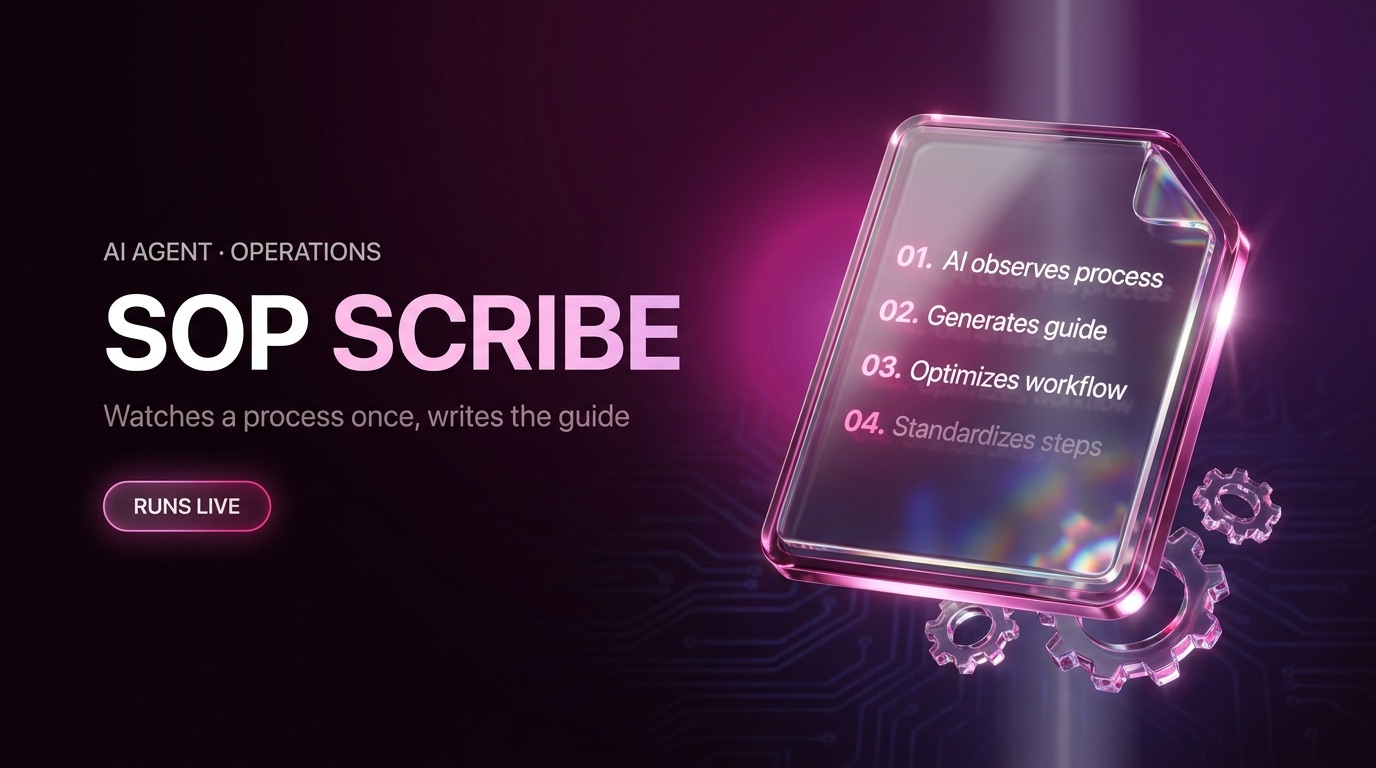
Watches someone do a process once and writes the step-by-step guide into the wiki. Every process that lives in one person's head is a resignation letter away from disappearing. Basil writes it down the first time he sees it.

Maps who's overloaded and who's free next week — staffing suggestions before the crunch. Burnout and idle time usually live on the same team a desk apart. Greta sees the imbalance a week early, while it's still just a schedule change.

Tracks every meeting to-do and nudges owners before the next meeting. Nothing agreed silently dies. Meetings produce promises; calendars produce amnesia. Ansel remembers every to-do and nudges its owner before anyone has to ask 'what happened to…?'
Reshuffles internal meetings to batch them and protect everyone's focus blocks. A day of five scattered meetings has no room left for actual work. Willa herds internal meetings together so focus time survives.

Renames, files and dedupes documents in shared drives — a drive you can finally search. Somebody has to be the person who keeps the shared drive from becoming a landfill. Felix is that person, and he never gets tired of it.

Answers 'where's the travel policy?' questions in Slack instantly, with the source linked. Every 'quick question' in Slack interrupts two people: the asker and the answerer. Iris answers from the wiki instantly so humans stay in flow.
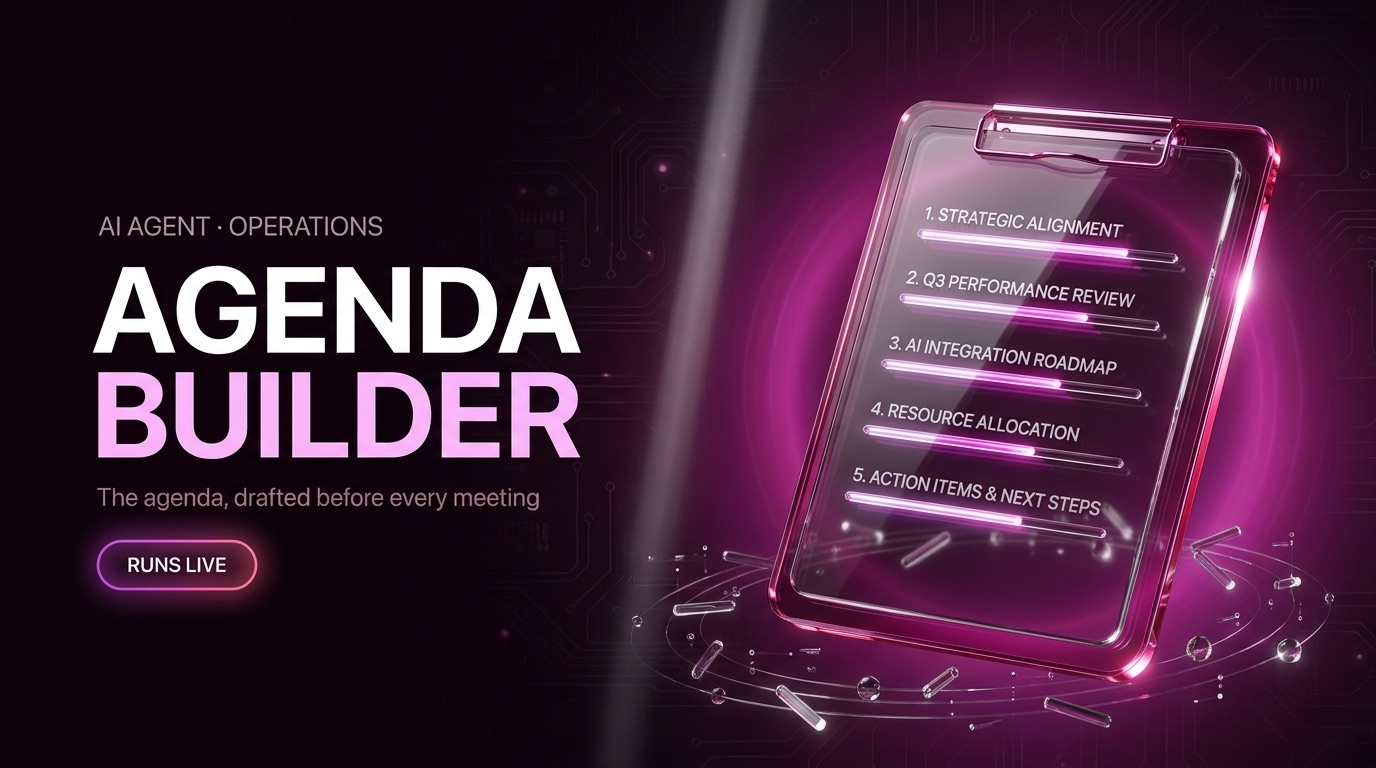
Before every recurring meeting, drafts the agenda from open threads and last time's action items. A meeting without an agenda is a conversation with a calendar invite. Fritz builds one from what's actually open, a day before, every time.

Turns a one-line trip request into a bookable itinerary within company policy — flights, hotel, ground. Booking a work trip costs an hour of tab-juggling per traveler. Tove turns 'Budapest, March 12-14' into a policy-compliant itinerary ready to approve.

Watches every internal request form — IT, facilities, ops — and routes each one with a clean summary. Internal requests die in shared inboxes nobody owns. Nils reads every submission the minute it lands and puts it in front of the right person.
Executive Strategy
9 agentsBriefs, boards and decisions — the CEO's office, staffed.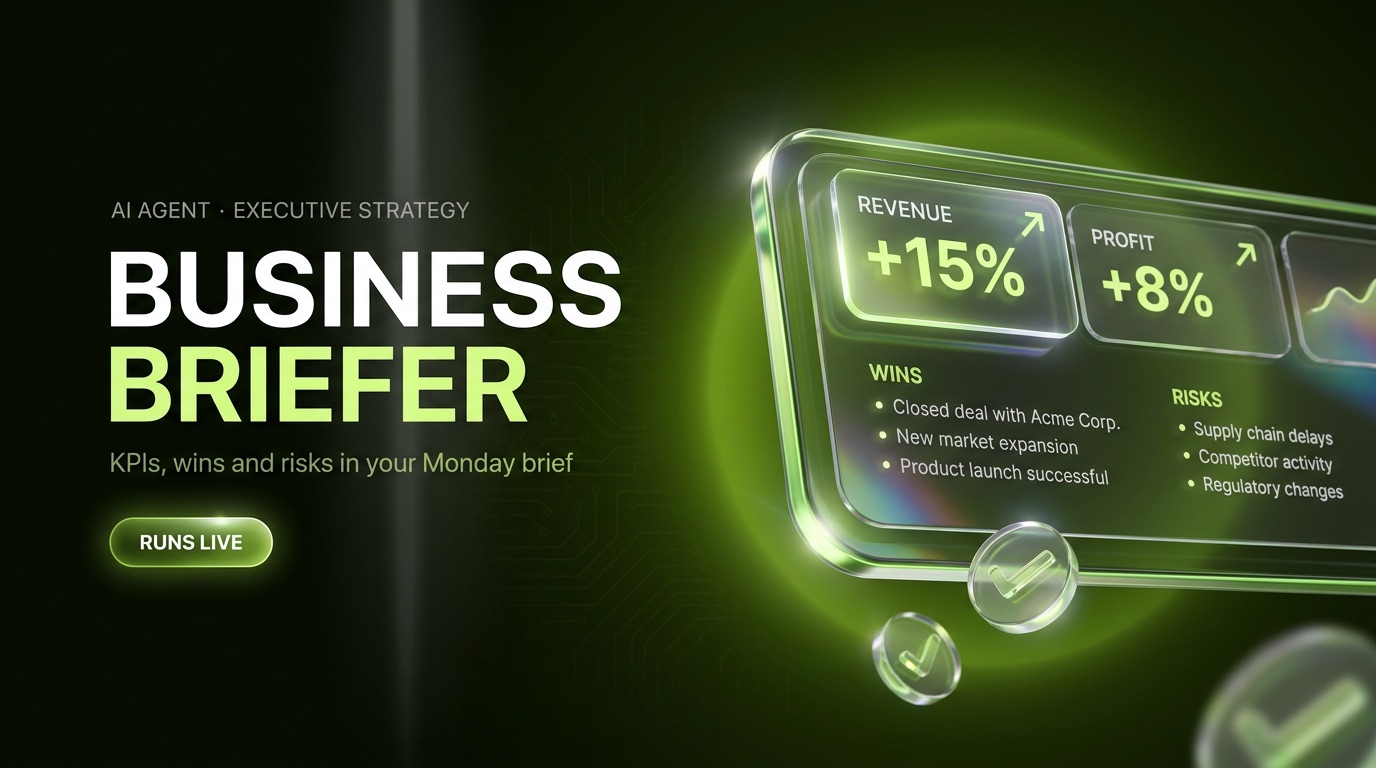
Compiles KPIs, wins, risks and pending decisions into your Monday morning brief. A CEO's week shouldn't start with an hour of dashboard archaeology. Blaise reads everything and hands over the five minutes that matter.

Runs cited, multi-source research on any strategic question — a brief in an hour. Strategic questions deserve better than one Google search and a hunch. Nadia reads wide, checks sources against each other, and shows her work.

Maps where you stand against competitors and where the open gap is. Most positioning is a guess made once and never revisited. Cyrus re-maps the landscape regularly and points at the gap nobody's standing in.

Monitors rival sites, pricing pages and job posts — an alert the moment something changes. Competitors tell you their strategy through pricing pages and job posts — if anyone's watching. Elif never stops watching.

Assembles the board pack from metrics, department updates and last quarter's commitments. Board prep steals a leadership week every quarter. Hale assembles the first draft from what already exists — the humans just polish the story.
Chases owners for mid-quarter check-ins — a traffic-light OKR roll-up, no nagging by you. OKRs die between the kickoff and the retro. Suki keeps them alive by doing the one thing nobody enjoys: asking everyone how it's actually going.
Captures big decisions, the reasoning and the owner from leadership meetings into a searchable log. Six months later, nobody remembers why you chose this vendor or killed that product. Marlow keeps the institutional memory the org chart can't.

Reviews every lost deal's notes and calls for patterns — a quarterly 'why we lose' report with receipts. Every lost deal has a lesson that usually gets buried with the opportunity. Vada reads them all and finds the pattern sales can't see one deal at a time.
Pulls the month's numbers and highlights into your standard investor update format — ready to edit and send. The monthly investor update always slips because it's important but never urgent. Reese drafts it on the first of the month so it actually goes out.
Finance
15 agentsEvery invoice matched, every variance explained, cash forecast.
Matches every incoming invoice against its PO and receipt — an exceptions list each morning. Every invoice that doesn't match its purchase order is money leaking out quietly. Margot checks all three documents against each other before anyone pays.

Watches overdue invoices and drafts escalating, polite payment reminders for your send-off. Unpaid invoices aren't awkward for Cormac — chasing them politely, on schedule, forever, is his whole personality.
Reviews every expense against policy and flags the out-of-policy ones. Nobody reads every expense report — except Lyra. She checks each line against policy so the honest majority gets approved fast and the exceptions get seen.

Matches bank transactions to ledger entries every night — unmatched items with suggested fixes. Reconciliation is the least glamorous job in finance and the first place fraud hides. Noor does it every single night without sighing once.

Explains month-over-month variances in every account in plain English for the close binder. The numbers moved — the CFO's first question is always why. Viggo has the answer written down before the question is asked.

Rolls a 13-week cash forecast from live receivables, payables and payroll every Monday. Companies don't die from losses; they die from running out of cash on a Tuesday. Tilda always knows which Tuesday.

Pings employees who owe receipts or expense memos until everything is collected. Somebody has to chase receipts. Bram was built for it: infinitely patient, impossible to embarrass, physically incapable of forgetting.

Sends each department head their spend-versus-budget one-pager every month. Department heads find out they're over budget at the worst possible time: quarter end. Sana tells them monthly, while there's still time to steer.
Reads every incoming invoice, extracts the line items and suggests the GL codes from history. Coding invoices is judgment applied a hundred boring times a week. Odile learns from every past coding decision and pre-fills the next one.

Assembles the weekly bill run and screens it for duplicates, odd amounts and suspicious changes. The payment run is where every AP mistake becomes real money leaving. Hank assembles it and checks every line twice before anyone signs.
Tracks every month-end close task, chases the late owners and reports where the close stands daily. The close slips one forgotten task at a time. Zola runs the checklist like a drill sergeant with good manners — everyone knows what's due and nothing gets skipped.
Turns the deal terms into a clean, ready-to-send client invoice. Invoices sent late get paid late. Vaughn drafts the invoice the moment the terms are set — right amount, right terms, right dates — so billing never lags the work.

Writes the polite, escalating dunning sequence for overdue invoices. Chasing money strains relationships when it's done clumsily. Della writes the reminder that gets paid without burning the account — tuned to how overdue and how important it is.

Turns the month's cash in, out and runway into a plain-English brief. Founders make cash decisions on gut because the numbers live in a spreadsheet nobody reads. Colm writes the month's cash story so the call is obvious.

Projects next quarter from the pipeline, cash and burn — with the assumptions shown. A forecast nobody can interrogate is just a guess in a suit. Rex builds the projection from real pipeline and burn and shows every assumption so leadership can argue with it.
HR
16 agentsHiring, onboarding and people questions — handled with care.
Scores every applicant against the job description, with reasons — a ranked shortlist each morning. Good candidates get lost in stacks of two hundred resumes. Priya reads every single one against the actual job — and shows her reasoning.

Coordinates panels, time zones and reschedules — confirmed invites, zero email ping-pong. Great candidates drop out while five calendars argue. Cole gets the panel booked in hours, not weeks, and handles every reshuffle.

Runs each new hire's day-1-to-30 checklist and chases IT, payroll and paperwork. A new hire's first week tells them everything about the company. Asha makes sure the laptop's ready, the accounts work, and someone remembered lunch.

Answers 'how many leave days do I have?' instantly from the handbook, sources cited. HR spends half its day answering the same twenty questions. Emil answers them instantly, cites the handbook, and never gets tired of asking-for-a-friend.
Turns a hiring manager's rough notes into a polished, ready-to-post job description. Job ads written in a hurry attract the wrong people. Dara turns three bullet points from the hiring manager into a post that sells the role honestly.

Tracks leave requests and balances, flags coverage clashes — a team absence calendar. Nothing sours a team like discovering half of it is on holiday the same week. Lotte sees the clash while both requests are still pending.
Produces employment, salary and visa letters on request — signature-ready in seconds. An employee waiting a week for a standard letter is a process failure. Sven produces it in seconds, correct, formatted, ready to sign.

Clusters engagement-survey comments into themes with real quotes — a quarterly sentiment digest. Engagement scores hide more than they show. Maeve reads every written comment — the real signal — and lets people speak in their own words.

Answers applicant questions instantly and keeps every candidate warm and informed through the process. Great candidates drop out of silent pipelines. Juni answers their questions in minutes and makes sure nobody ever wonders where their application went.

Runs the leaver paperwork checklist end to end and codes exit-interview themes into a why-people-leave memo. Offboarding done badly burns the alumni network and hides the real reasons people go. Ward handles the paperwork cleanly and listens carefully on the way out.

Turns a role's must-haves into an ideal-candidate scorecard the whole panel hires against. Hiring goes sideways when everyone's judging a different bar. Thea writes the scorecard first, so the panel screens against one honest definition of great.
Writes the job post and the sourcing messages that make the right people apply. A dull job post filters for the wrong candidates. Jem writes the post that sells the role honestly and the outreach that reaches the ones who would never apply cold.

Reads applications against the scorecard and hands back a ranked shortlist with reasons. Resume piles get skimmed, and good candidates get missed. Vera reads every one against the actual criteria and shows her work on the shortlist.
Builds the interview questions and scoring rubric for a role's competencies. Unstructured interviews measure charisma, not competence. Dane maps what to test and writes the questions and rubric so every candidate meets the same fair bar.

Drafts the offer letter and the close message that gets a yes. The gap between 'we'd like to hire you' and a signed offer is where good candidates slip. Orla writes the offer and the close comms that address the real hesitation.

Writes the 30-60-90 plan and first-week checklist so a new hire starts strong. A new hire's first month sets their whole tenure — and usually it's improvised. Brin writes the 30-60-90 and the access checklist so day one is ready before they arrive.
Legal & Compliance
9 agentsContracts reviewed, renewals watched, rules tracked.
First-pass review of every inbound NDA against your playbook — a redline with deviations flagged. Every deal starts with an NDA sitting in someone's inbox for a week. Portia reviews it against the playbook in minutes so business keeps moving.
Marks up supplier and customer contracts against your standard positions, plus a one-page risk memo. First-pass contract review is expensive lawyer time spent on pattern matching. Magnus does the pattern matching; the lawyer does the judgment.

Answers 'what did we agree with X?' from the signed-contract archive, clause cited. The answer is always 'in the contract' — if anyone could find the contract. Selma knows every clause in every signed agreement.
Tracks contract end dates and auto-renewal windows — 90/60/30-day alerts. Auto-renewal clauses are traps armed by the calendar. Edwin watches every notice window so no contract renews by accident again.
Drafts answers to security and vendor questionnaires from everything you've answered before. Every enterprise deal arrives with a 300-question security questionnaire. Zofia has read every answer you've ever given and drafts the whole thing.
Monitors new rules and guidance in your jurisdictions — a weekly 'what changed, who's affected' brief. Regulations change quietly and punish loudly. Ines reads the boring announcements so you hear about them before the fine does.

Chases every unsigned contract sitting in someone's inbox, politely, daily. Deals close and then the contract sits unsigned for eleven days. Amos nudges every pending signature until the ink is dry.
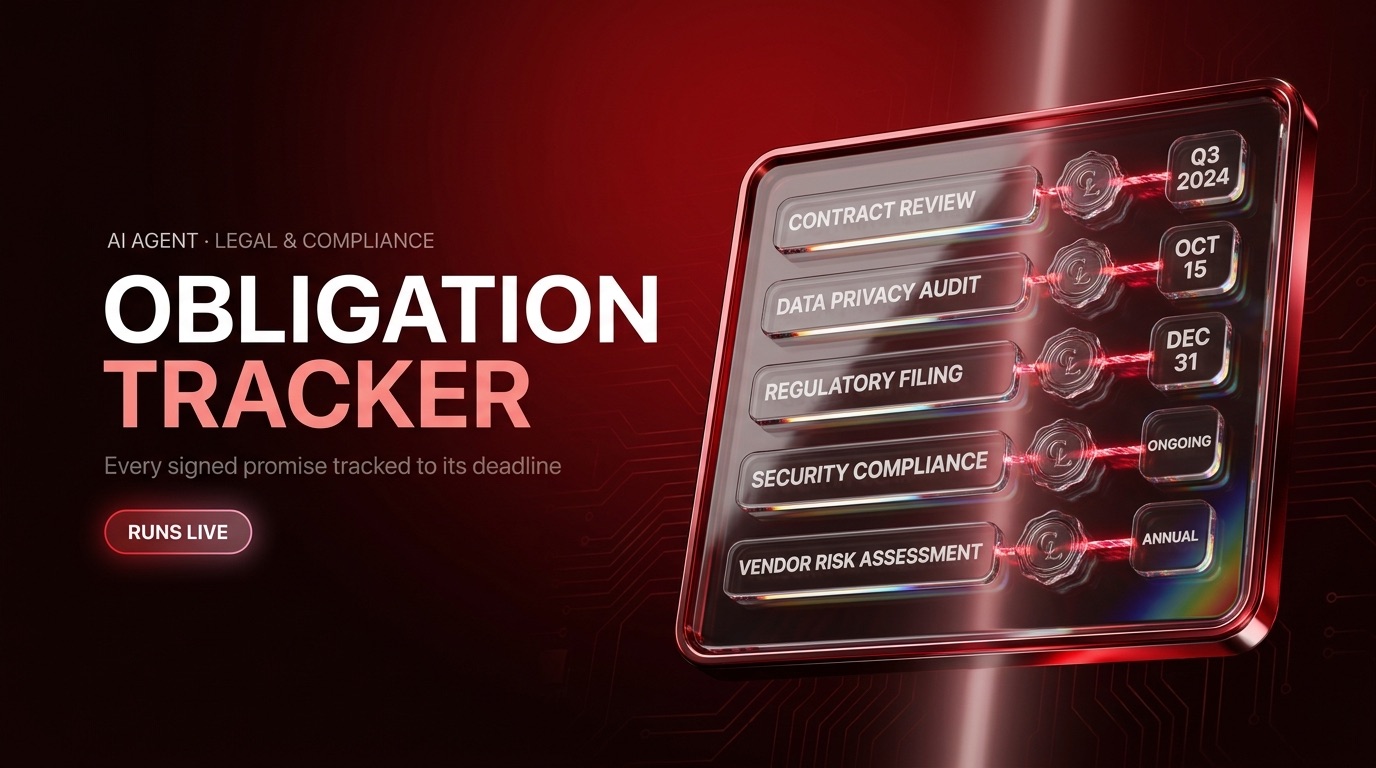
Extracts every SLA, deliverable and deadline from signed contracts into one obligations calendar. You signed it — do you know everything it commits you to? Sy reads every executed contract and turns the promises into dated, owned obligations.

Continuously gathers SOC 2 / ISO control evidence from your systems — an always-current audit binder. Audit prep is a quarter of panic unless the evidence was collected all along. Nara collects it continuously, so the audit is a review, not an archaeology dig.
IT & Engineering
11 agentsHelpdesk, incidents, access and code — kept safe and moving.
Resolves password resets and how-do-I tickets in chat, end to end — humans see only the hard ones. Most IT tickets are the same ten problems. Ilya resolves those in chat, instantly, so engineers only see the tickets that need an engineer.
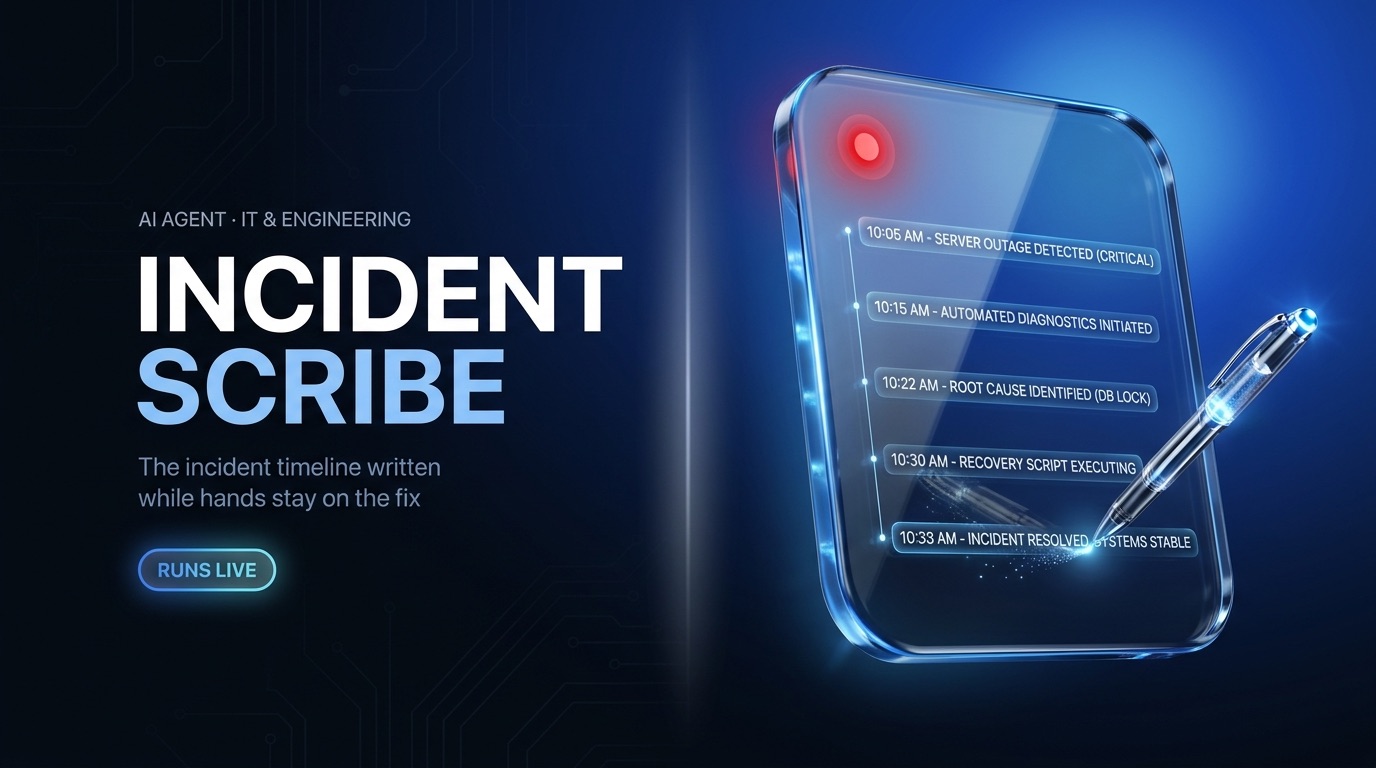
Groups alerts, assembles the timeline and drafts the incident brief in the channel. During an incident, nobody has hands free to write things down. Wade keeps the timeline so the fixers can fix.

The day someone leaves, lists every account and license to revoke — a same-day checklist. Ex-employees with live accounts are the security hole everyone forgets. Nell forgets nothing — every account, every license, same day.
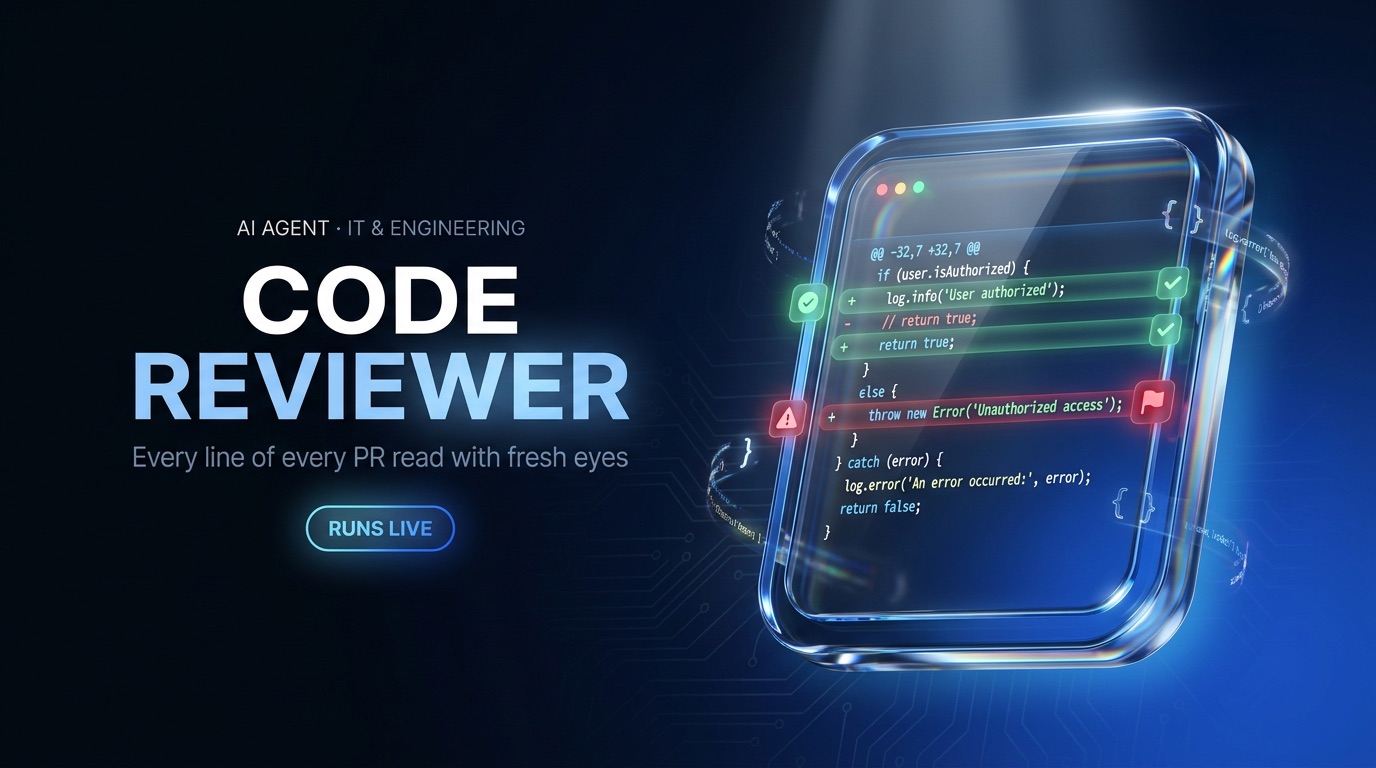
Reviews every pull request for bugs, security and style — inline comments plus a verdict. Human reviewers get tired and wave things through on Fridays. Kofi reads every line of every PR with the same attention, always.

Matches newly published CVEs against your stack — a prioritized patch list. Thousands of vulnerabilities publish every month; a handful touch your stack. Uma knows exactly which handful, every morning.
Confirms every nightly backup completed and can restore — a green/red report each morning. A backup nobody has tested is a hope, not a backup. Jarl checks every job ran — and that restores actually restore.
Inspects every employee-reported phishing email — a verdict-and-block list for security. Every 'is this legit?' forward deserves a fast answer — silence teaches people to stop reporting. Rosa answers every one in minutes.
Writes up what happened overnight for the next shift — a morning handoff digest. The night's chaos shouldn't live only in the outgoing engineer's exhausted memory. Chip writes the handoff before they log off.
Checks entitlements and routes every software-access request for the right approval — no ticket limbo. Access requests sit for days while people can't do their jobs. Gil checks what the person is entitled to and routes the approval in minutes.
Watches every open pull request and nudges reviewers before it goes stale — merged work, not forgotten work. Code that waits for review rots — conflicts pile up and momentum dies. Pim keeps every PR moving with well-timed, non-annoying nudges.
Turns the incident timeline and channel chatter into a first-draft postmortem — blameless and ready for review. Postmortems get skipped because writing them hurts. Ash drafts the whole thing from what already happened in the channel, so the team just adds judgment.
Product R&D
10 agentsFeedback in, specs out — the voice of the user, organized.
Clusters feedback from support, reviews and sales calls — weekly top themes with quotes. User feedback arrives scattered across ten tools and dies there. Skye gathers every scrap into themes the roadmap can actually act on.
Turns an approved idea into a structured first-draft PRD ready for the PM's edit. The blank PRD page is where product momentum goes to die. Idris writes the structured first draft so the PM starts editing, not staring.
Converts shipped tickets into customer-friendly release notes each release. Engineers ship it; nobody tells the customers. Cora translates merged tickets into notes users actually want to read.

Watches competitor changelogs and pricing pages — a weekly 'what they shipped' digest. Your competitors publish their roadmap one changelog entry at a time. Matteo reads every one so product decisions come with eyes open.

Transcribes user-research calls and tags the insights — highlights plus a coded findings doc. Research calls are gold that nobody has time to mine. Hana transcribes, tags and clips every session the day it happens.
Collects beta-tester reports, dedupes the bugs from the feature asks — a triaged issues list. Beta feedback arrives as chaos: bugs, wishes and confusion in one inbox. Ozzy sorts it before it buries the team.
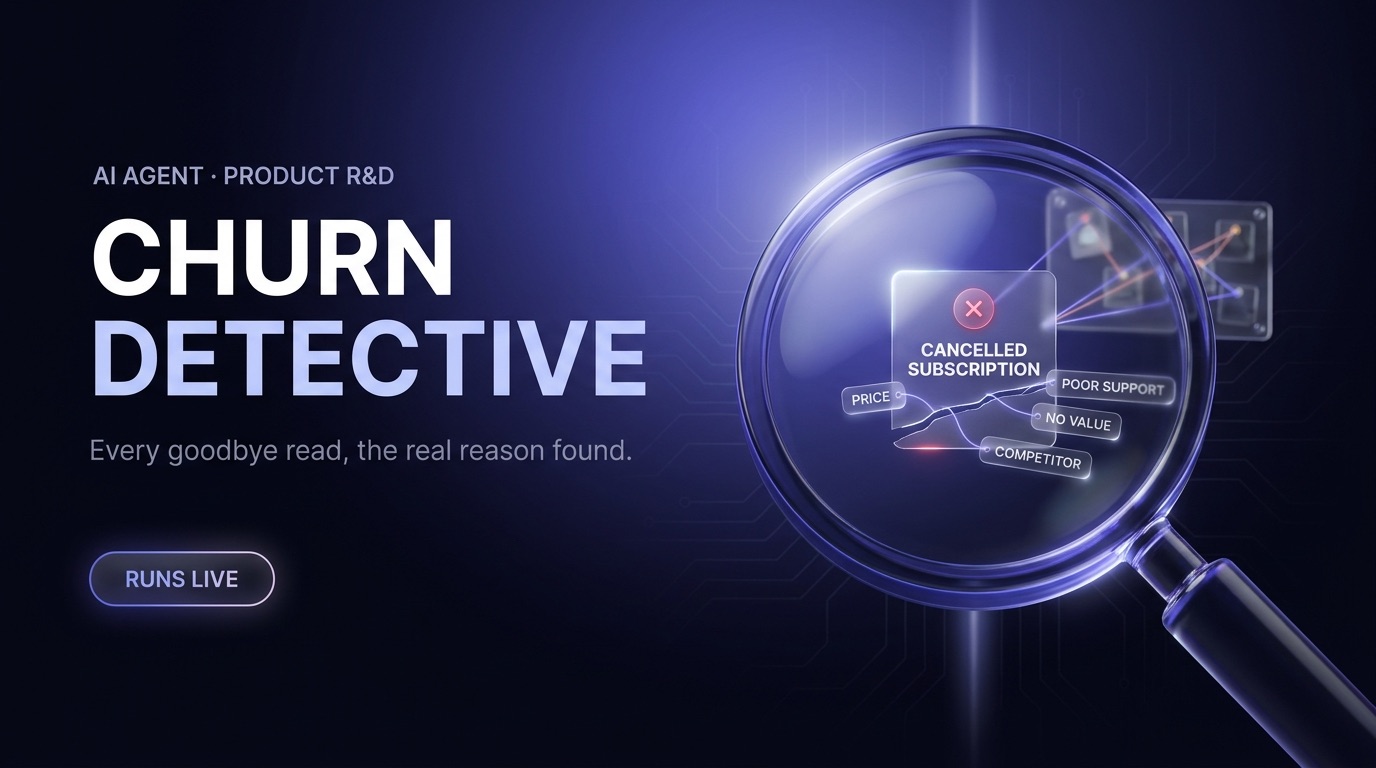
Mines cancellation tickets and exit surveys — a monthly 'why they left' report. Every cancellation has a reason; most companies never collect them. Etta reads every goodbye and finds the patterns that stop the next one.
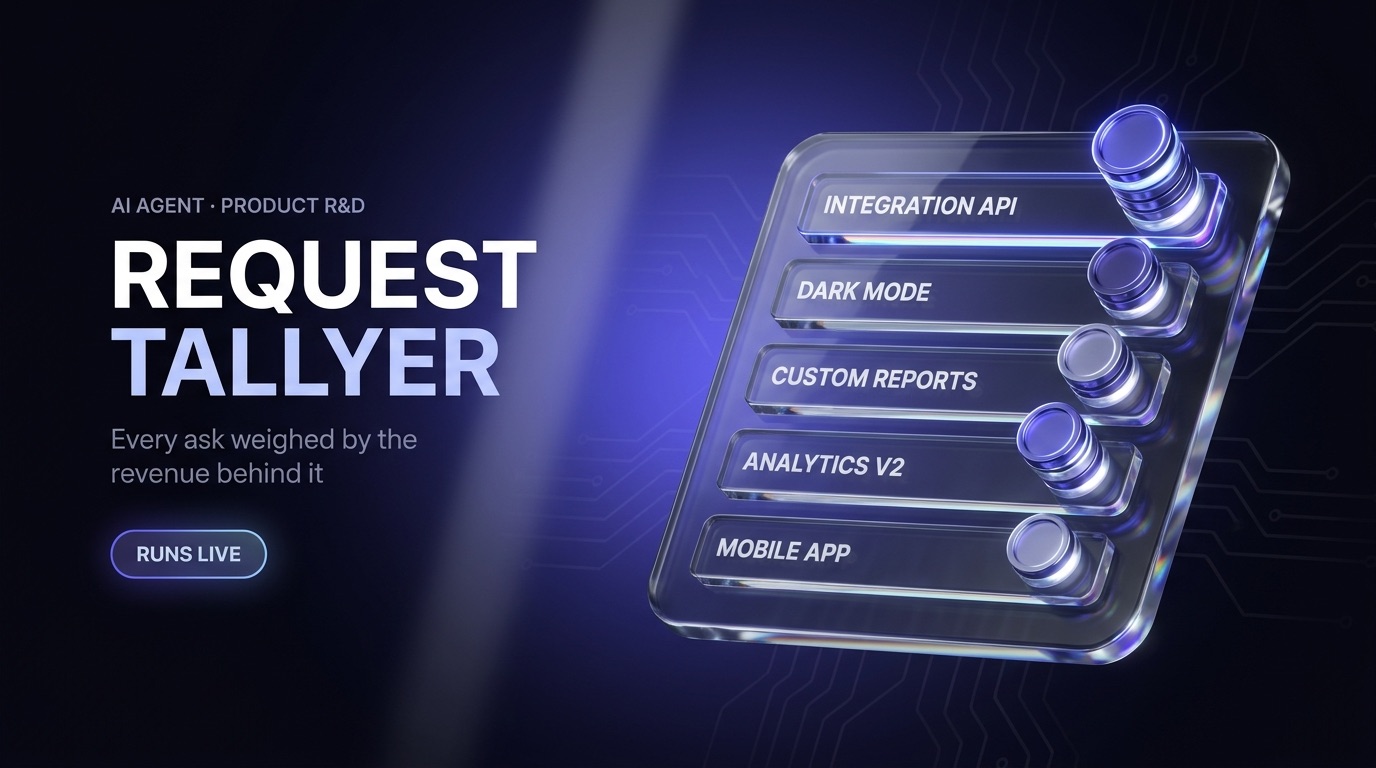
Links every feature request to the CRM revenue behind it — a request list ranked by dollars at stake. The loudest request isn't the most valuable one. Cyd attaches the actual revenue behind every ask so the roadmap argues with numbers.

Drafts the survey questions, then reads every open-text answer and synthesizes the findings one-pager. Surveys produce a thousand open-text answers nobody reads. Lior writes better questions going out and actually reads everything that comes back.
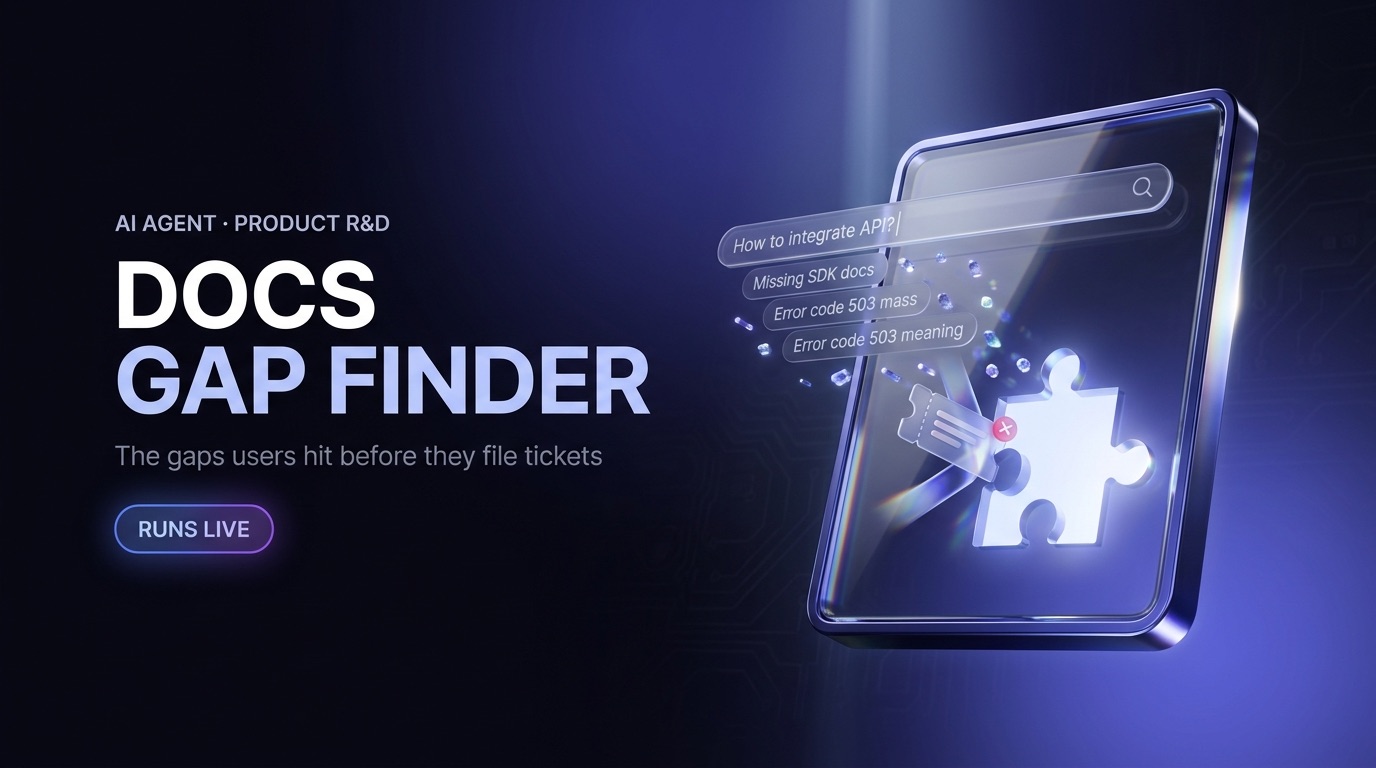
Spots the questions users keep asking that the documentation doesn't answer — a ranked docs backlog. Every undocumented answer becomes a support ticket forever. Beck finds the gaps between what users ask and what the docs say.
Procurement & Supply
9 agentsVendors vetted, renewals negotiated, stock watched.
Finds and prequalifies candidate suppliers for any need — a shortlist with pricing and risk notes. Whoever answers the first sales call usually wins the contract — that's not sourcing. Marta builds a real shortlist before anyone talks price.
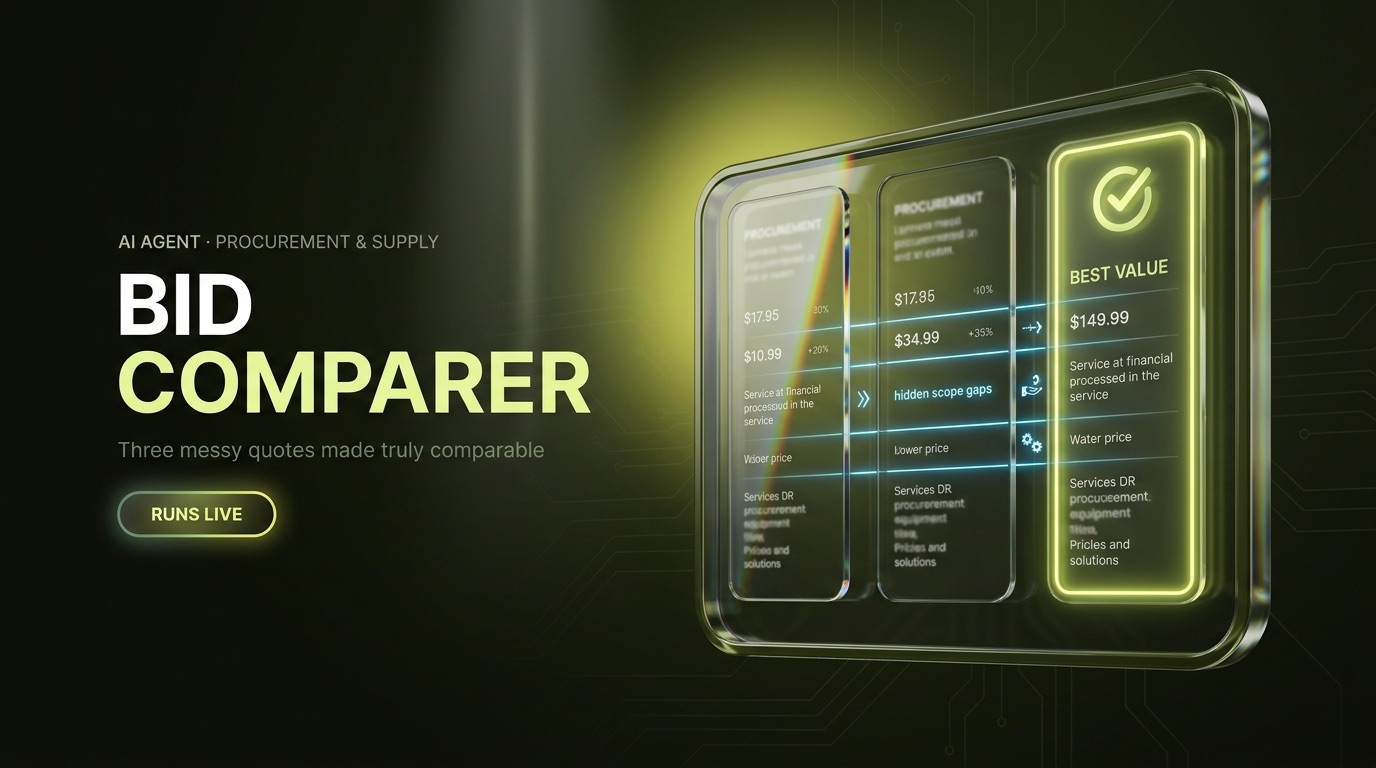
Normalizes incoming quotes side by side against benchmarks — a clean comparison matrix. Three quotes in three formats hiding three different scopes — that's how bad deals get signed. Gus makes them comparable line by line.

Keeps every supplier's status, spend and contacts current in one place. Vendor knowledge lives in inboxes and leaves with employees. Petra keeps the single record: who we use, what we pay, who to call.

Flags upcoming SaaS renewals with usage data and benchmark pricing — a negotiation brief each time. Renewals auto-pilot into price increases because nobody prepared. Callum shows up 90 days early with usage data and market prices.

Watches supplier insurance and compliance certificates for expiry — reminders before they lapse. An expired supplier insurance certificate is invisible until the day it's a lawsuit. Dot watches every expiry date so that day never comes.
Monitors stock levels against forecast and reorder points — a suggested reorder list. Stockouts lose sales; overstock buries cash. Ram watches every level against the forecast and says exactly when and how much to reorder.

Chases in-transit orders and flags slipping ETAs — a daily delivery-exceptions board. Nobody notices the late shipment until the line stops. Nima chases every order in transit and flags the slips while there's still time to react.

Cleans and classifies raw spend into categories — a monthly spend-by-category report. You can't negotiate what you can't see. Kit turns the messy transaction dump into clean categories that show where the money actually goes.

Scans news, financial signals and sanctions lists for trouble at your key suppliers — alerts with sources attached. Your supply chain is only as stable as its shakiest supplier. Saul reads the bad news before it reaches your inbox — or your production line.
Data & Analytics
10 agentsNumbers turned into stories, anomalies into answers.
Turns yesterday's dashboard numbers into a plain-English story in Slack each morning. Dashboards show numbers; nobody has time to stare at them. Quinn reads yesterday's numbers and tells you the story in plain English.

Watches every key metric for unusual moves and investigates why — alert plus suspected cause. By the time a human notices the dip, it's three days old. Neo sees it in the hour — and shows up with a suspected cause, not just a siren.

Answers 'what was X last quarter?' in chat with a real query, a chart and the SQL behind it. Every data question waits days in an analyst's queue. Ada answers in chat, in seconds — and shows the query so you can trust the number.
Builds the weekly business review deck from live data before the meeting. Someone rebuilds the same deck every Sunday night. Bo builds it from live data every Monday morning — same numbers, zero Sunday.
Checks every data pipeline loaded on time — a red/green report each morning. Stale data is worse than no data — people trust it. Faye checks every pipeline every morning so nobody presents yesterday's numbers as today's.
Dedupes, enriches and fixes bad records in the CRM — a weekly cleaned-records log. Every CRM rots: duplicates, dead emails, three spellings of the same company. Ziggy scrubs it weekly so every team downstream works with clean data.

Keeps every metric's definition documented and flags conflicting versions. Two teams, two revenue numbers, one awkward meeting. Norah keeps the one true definition of every metric — and catches the forks early.
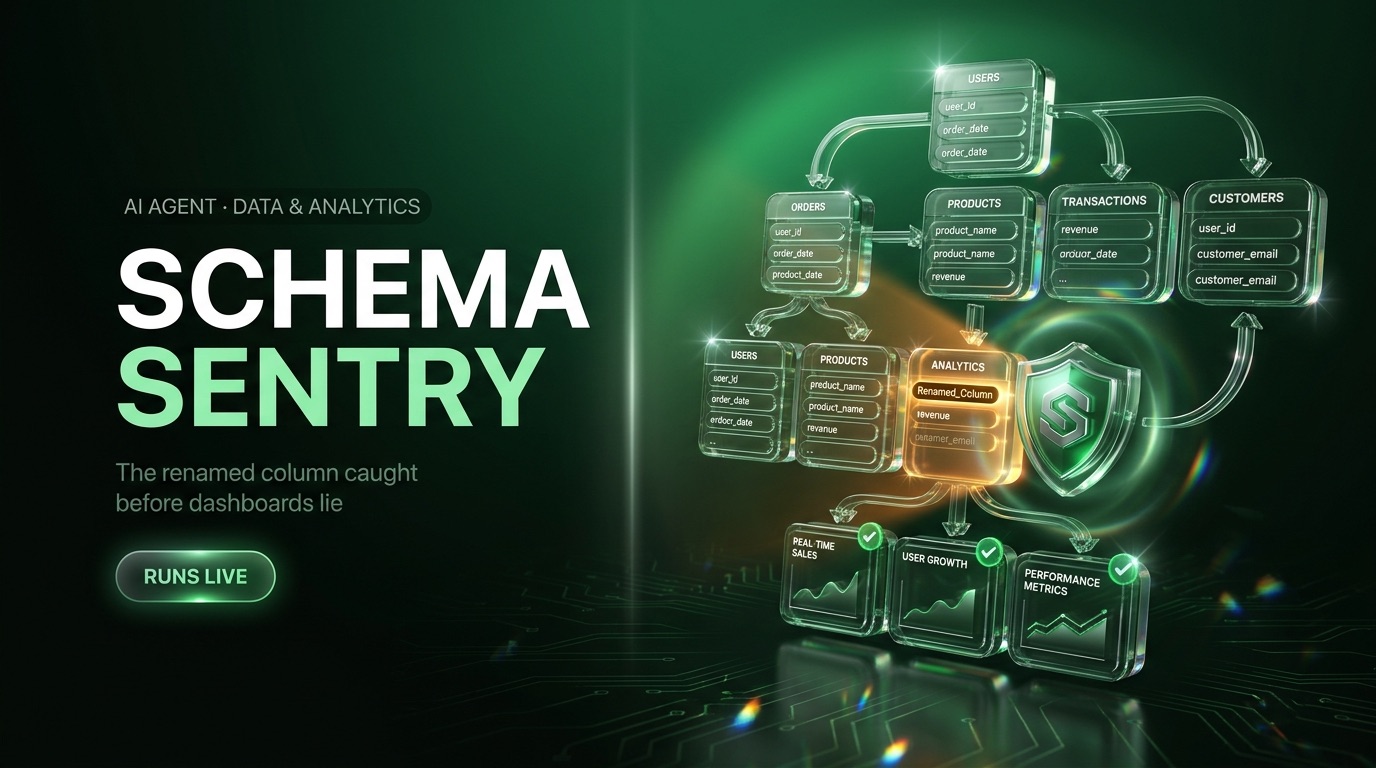
Flags upstream schema changes before they silently break your dashboards — with the blast radius listed. One renamed column upstream and half the company's dashboards quietly lie. Tam catches the change the moment it lands and names every report it touches.

Finds the unused dashboards and broken tiles nobody admits to owning — a quarterly pruning list. Dashboards multiply and never die, until nobody trusts any of them. Moss finds what's unused, broken or duplicated and proposes the pruning.

Compares every model forecast against what actually happened and reports the drift honestly. Forecasts that are never checked against reality become fiction with a chart. Rue scores every prediction after the fact, so the models stay honest.
Affiliate Marketing
64 agentsThe affiliate demo team — the same OS run as a performance-marketing business.
Researches a topic, writes a full 'best X for Y' article, and gets it ready for your blog.

Turns an offer into fresh ad angles and ready-to-shoot creative ideas, then watches for tired ads.

Checks all your campaigns every morning and tells you what changed overnight.
Writes your Monday summary — what made money, what lost money, what to do this week.
Reads your ads and pages before they go live and flags anything that could get you banned.
Matches what networks say they owe you against your own numbers, and flags missing money.

Hunts networks for offers worth running and shortlists the best fits for you.

Background-checks a network before you send it traffic — payment history, terms, red flags.

Drafts the full launch plan for a new campaign — budget, targeting, schedule.

Watches every campaign and drafts kill-it or scale-it calls for you to approve.

Drafts the landing page to match a new angle — copy, layout, and compliance notes.

Spots articles that are slipping on Google and queues them for a refresh.

Drafts the messages to your affiliate managers — bump asks, cap raises, exclusive deals.

Keeps every network deal and negotiation in one tracked pipeline.
Watches your ad accounts for the warning signs that come before a ban.

Projects what's landing in the bank and when — so you can spend with confidence.

Scans which verticals and GEOs are heating up so you chase demand, not yesterday's winners.

Compares the same offer's payout across every network so you always run it where it pays most.

Watches spend pacing across every campaign and flags overspend before the day runs away.

Spots bot and junk traffic draining budget and drafts the block list for you to approve.

Drafts a batch of fresh hooks for an angle and ranks which ones to shoot first.

Watches CTR and CPM drift to catch tired creative early and queues the refresh.

Writes 'X vs Y' buyer-intent comparison articles that rank and convert.

Finds buyer-intent keywords competitors rank for and you don't, then briefs the article.
Checks tracking and attribution so conversions land on the right source, not a black hole.

Groups buyers by cohort to show which sources bring repeat value, not just cheap clicks.

Builds the case and drafts the ask for a payout bump on offers you're already scaling.
Finds new networks carrying your winning offers so you're never single-sourced.
Watches Meta/Google/TikTok policy updates and flags what breaks your live campaigns.
Audits pages and ads for cloaking and missing FTC disclosures before they get you banned.
Tracks chargebacks and clawbacks per offer so surprise reversals stop eating your margin.
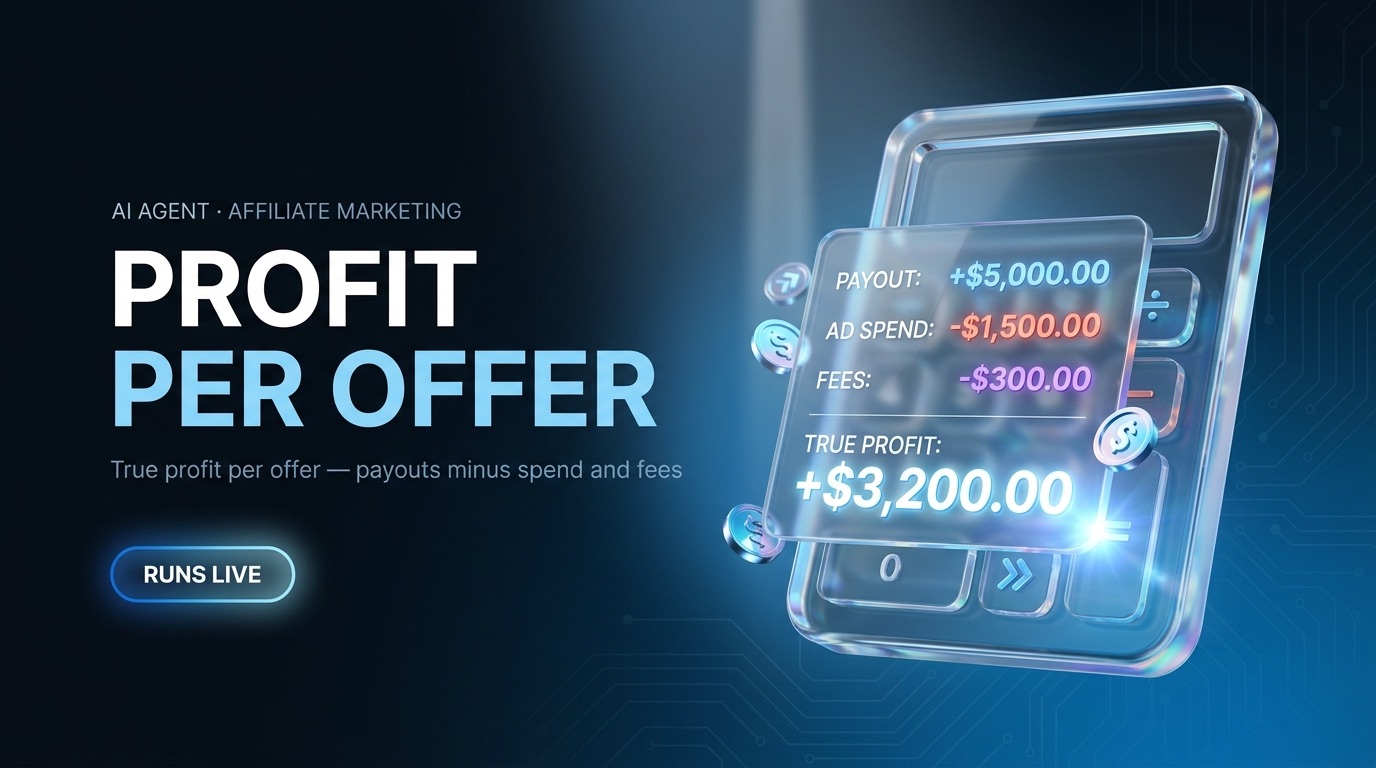
Nets payouts against real ad spend and fees to show true profit per offer, not vanity ROAS.
Tracks which offers your competitors push hardest so you never miss a proven winner.
Maps which offers and verticals peak each season so you're early, not late.
Finds the next GEOs to take a winning offer into, ranked by fit and competition.
Mines an offer's top ads for the angles already working, so you copy proof not guesses.
Finds the hours and days each campaign converts, so budget stops burning at 3am.
Recommends CBO vs ABO, bid caps and cost controls for each campaign stage.
Drafts fresh lookalikes and interest stacks when a winner starts saturating.
Finds which placements waste spend so you can cut them and shift budget to what converts.
Drafts scroll-stopping thumbnail concepts for an angle, ranked by stopping power.
Writes the brief your UGC creators need — hook, beats, do's and don'ts.
Turns an angle into ready-to-shoot short-form scripts with hooks that hold.
Rewrites risky ad copy to keep the punch but pass Meta/Google policy.
Writes buyer-intent 'top N' listicles that rank and route clicks to your best offer.
Adds the FAQ section and schema markup that win rich results and 'People Also Ask'.
Maps internal links so your money pages get the equity to rank.
Rewrites slipping articles — updated stats, new angle, tighter intent match.
Watches every metric for sudden swings and flags what broke before it costs you a day.
Finds exactly where users bail — ad, lander, offer — and what to fix first.
Calls A/B winners with real statistical significance — no killing tests too early.
Builds the one numbers view that ties spend, revenue and profit per offer together.
Chases exclusive access to offers you're scaling, before competitors flood them.
Keeps every affiliate-manager touchpoint warm — last chat, open asks, birthdays.
Builds the case and drafts the ask for network co-op dollars on offers you drive.
Drafts the case to move a network to weekly pay so cash stops getting stuck.
Checks every page and ad has the affiliate disclosure the FTC requires, worded right.
Reads a lander's claims against policy and offer terms before you send traffic.
Flags trademark-bidding and brand-term risk that gets accounts and offers pulled.
Flags creative and offers that trigger chargebacks before they wreck your merchant account.
Works out what to set aside for taxes each week so a big month isn't a big bill.
Flags every over-budget spend request for a human yes before the money moves.
Watches net margin per offer and flags the slow bleed before a 'winner' goes red.
Tracks what each network owes and drafts the chase the moment a payment runs late.